– Fuses remain one of the most fundamental forms of electrical protection in use today, and the devices that house and manage them, fuse holders and fuse switch disconnectors, are critical components in any well-designed electrical installation. While circuit breakers have replaced fuses in many residential and commercial applications, fuse-based protection continues to be preferred in specific industrial, telecommunications, and power electronics applications where their particular characteristics offer distinct advantages. Understanding fuse holders and fuse switch disconnectors, their applications, and how to select the right product is valuable knowledge for electricians, engineers, and panel builders.
What Is a Fuse Holder?
A fuse holder is a device that provides a mechanical mount, electrical connection, and in many cases physical protection for a fuse element. The fuse holder's primary function is to ensure that the fuse is correctly positioned within the electrical circuit and can be safely replaced when it operates following a fault. Fuse holders range from simple open-mounting fuse clips used in low-current electronics to enclosed, finger-safe DIN-rail-mounted fuse holders used in industrial control panels.
Key requirements for a quality fuse holder include low and stable contact resistance at the fuse terminals to prevent additional voltage drop, a secure mechanical grip on the fuse that prevents vibration-induced contact problems, finger-safe design that prevents accidental contact with live parts during fuse replacement, and compatibility with the correct fuse size and rating for the circuit.
What Is a Fuse Switch Disconnector?
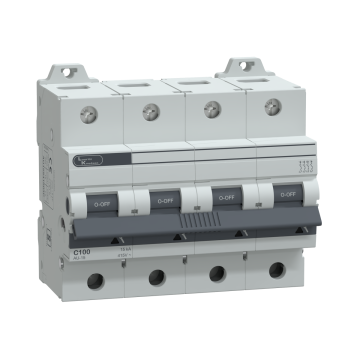
A fuse switch disconnector combines the protective function of a fuse with the isolation function of a switch in a single device. It can be used to isolate a circuit for maintenance, like a standard switch or isolator, while also providing fuse-based overcurrent protection. The fuse switch disconnector is widely used as an incomer device in industrial and commercial distribution boards, as a main switch for machinery supply circuits, and as a feeder protection and isolation device in motor control panels.
The fuse switch disconnector provides a visible break when in the open position, confirming that the circuit is fully isolated for maintenance purposes. This feature is particularly important in industrial environments where lockout-tagout procedures require a visible, verifiable open circuit before maintenance work can commence.
Types of Fuse Switch Disconnectors
Fuse switch disconnectors are essential for isolating electrical circuits safely and protecting them from overcurrent. They combine a switch mechanism with a fuse, allowing maintenance or emergency shutdown while ensuring the circuit is protected from short circuits and overloads. Choosing the right type depends on fault current levels and application requirements.
Here are the main types of fuse switch disconnectors:
HRC Fuse Switch Disconnectors
High Rupturing Capacity (HRC) fuse switch disconnectors use HRC fuses, also known as HBC (High Breaking Capacity) fuses, which are capable of interrupting very high fault currents safely and without explosion. HRC fuses contain a quartz sand filling that absorbs the arc energy when the fuse element melts, making them suitable for industrial applications close to transformers where fault levels are high.
Semi-Enclosed Fuse Switch Disconnectors
Semi-enclosed fuse switch disconnectors use rewireable fuses and are typically found in older residential and light commercial installations. They are less common in new installations, having been largely superseded by MCBs and HRC fuse-based devices.
Selection Criteria for Fuse Switch Disconnectors
– Current rating: Must match the maximum current of the circuit or equipment being protected. Selecting the correct rating ensures safe operation and prevents overheating or nuisance failures during normal load conditions.
– Breaking capacity of the fuse: The fuse element must be capable of safely interrupting the highest possible fault current at the installation point. This is critical to avoid damage, arc faults, or safety hazards during short circuit conditions.
– Number of poles: The choice depends on the system type. Single-phase applications typically use single or double pole devices, while three-phase systems require triple pole or four pole disconnectors to ensure complete isolation of all conductors.
– Fuse size compatibility: It is essential to ensure that the fuse switch disconnector is compatible with the correct fuse standard, such as BS 88 or IEC 60269. Using the wrong fuse size or type can compromise protection and performance.
– Isolation verification: For safety procedures like lockout-tagout, the device must provide a clearly visible open position. This helps technicians confirm that the circuit is fully isolated before maintenance or repair work begins.
– Mounting and installation type: Consider whether the device is panel-mounted, DIN rail-mounted, or designed for outdoor enclosures, ensuring it suits the installation environment and available space.
Applications of Fuse Holders and Fuse Switch Disconnectors
Fuse holders are used extensively in industrial control panels for protecting individual control circuits and instrumentation supplies, in telecommunications and data centre equipment for protecting DC power distribution circuits, and in photovoltaic solar systems for protecting individual string circuits from the solar array.
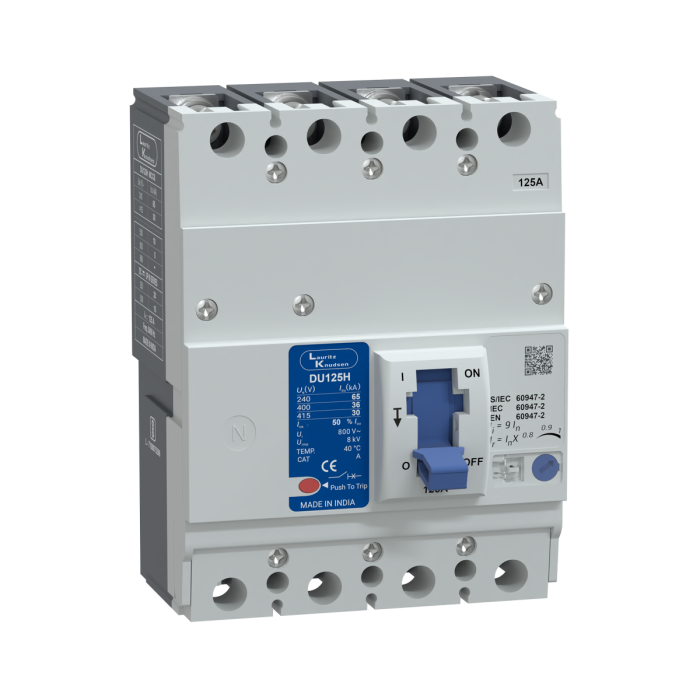
Fuse switch disconnectors are used as main incomers in industrial distribution boards where the combination of isolation and fuse-based protection is preferred, as machinery supply isolators in manufacturing plants, and as feeder protection devices in large commercial distribution systems where the fault level exceeds the breaking capacity of available MCBs.
Genuine Products from Lauritz Knudsen SmartShop
Fuse holders and fuse switch disconnectors must meet their rated specifications to function safely. A fuse holder with high contact resistance will cause voltage drop and localised heating. A fuse switch disconnector that fails to provide a reliable visible break cannot be trusted for lockout-tagout isolation. Sourcing from verified, certified suppliers is therefore essential.
Lauritz Knudsen Electrical & Automation's SmartShop stocks fuse holders and fuse switch disconnectors as part of its comprehensive low-voltage protection product range. All products on Lauritz Knudsen SmartShop are genuine, directly sourced from Lauritz Knudsen Electrical & Automation's manufacturing portfolio, and backed by the manufacturer's quality assurance and service network. With 24×7 online ordering, fast doorstep delivery, and bulk pricing for contractors and panel builders, Lauritz Knudsen SmartShop is a reliable procurement source for fuse-based protection products across India.
Conclusion
Fuse holders and fuse switch disconnectors continue to play an important role in electrical protection and isolation across a wide range of applications. Understanding the types available, their correct applications, and the selection criteria ensures that the right product is specified for each installation. For genuine, correctly specified fuse holders and fuse switch disconnectors, Lauritz Knudsen Electrical & Automation's SmartShop is a trusted and reliable source for electricians, engineers, and panel builders across India.