Introduction
Medical imaging tests such as CT scans and MRIs sometimes use contrast agents to make certain tissues, blood vessels, or organs easier to see. After a scan, many people wonder how to remove contrast dye from your body and whether they need to take special steps to “flush” it out.
The good news is that most contrast agents are naturally eliminated by the body, primarily through the kidneys and urine. In most healthy adults, no special detox, supplement, or cleansing treatment is necessary. Drinking a reasonable amount of water, following your healthcare provider's instructions, and watching for unusual symptoms are generally the most important steps.
1. Drink Water if Your Healthcare Provider Allows It
One of the simplest things you can do after receiving contrast is maintain normal hydration.
Water supports the kidneys, which are responsible for removing many contrast agents from the bloodstream. Staying hydrated also helps you maintain normal urine production.
A practical approach
After your imaging test:
- Drink fluids normally throughout the day.
- Follow any specific instructions from your doctor or imaging center.
- Avoid forcing large amounts of water in a short period.
- If you have been told to restrict fluids because of a heart, kidney, or other medical condition, follow that restriction instead.
In Easy Words: Drink normally, but do not try to “over-flush” your body.
2. Let Your Kidneys Do Their Job
Your kidneys continuously filter waste and certain substances from your blood. Many commonly used contrast agents are eliminated primarily through urine.
For someone with healthy kidney function, the body can usually process and remove the contrast without any special treatment.
This is why most people do not need a detox program after a CT scan or MRI with contrast.
Your healthcare team may take kidney function into consideration before administering certain contrast agents, especially when there is a known history of kidney disease.
3. Continue Your Normal Routine
Unless your healthcare professional gives you different instructions, you can generally return to your normal daily activities after an imaging appointment.
You do not normally need to:
- Fast after the examination unless instructed.
- Take a special cleansing supplement.
- Use laxatives to remove contrast.
- Exercise intensely to “sweat out” contrast.
- Drink unusual mixtures marketed as detox remedies.
The contrast is generally processed internally rather than removed through sweating.
Gentle movement and normal activity may be fine if you feel well, but exercise is not a required method of eliminating contrast.
4. Know Which Type of Contrast You Received
Understanding the type of contrast used can make the recovery process less confusing.
CT contrast
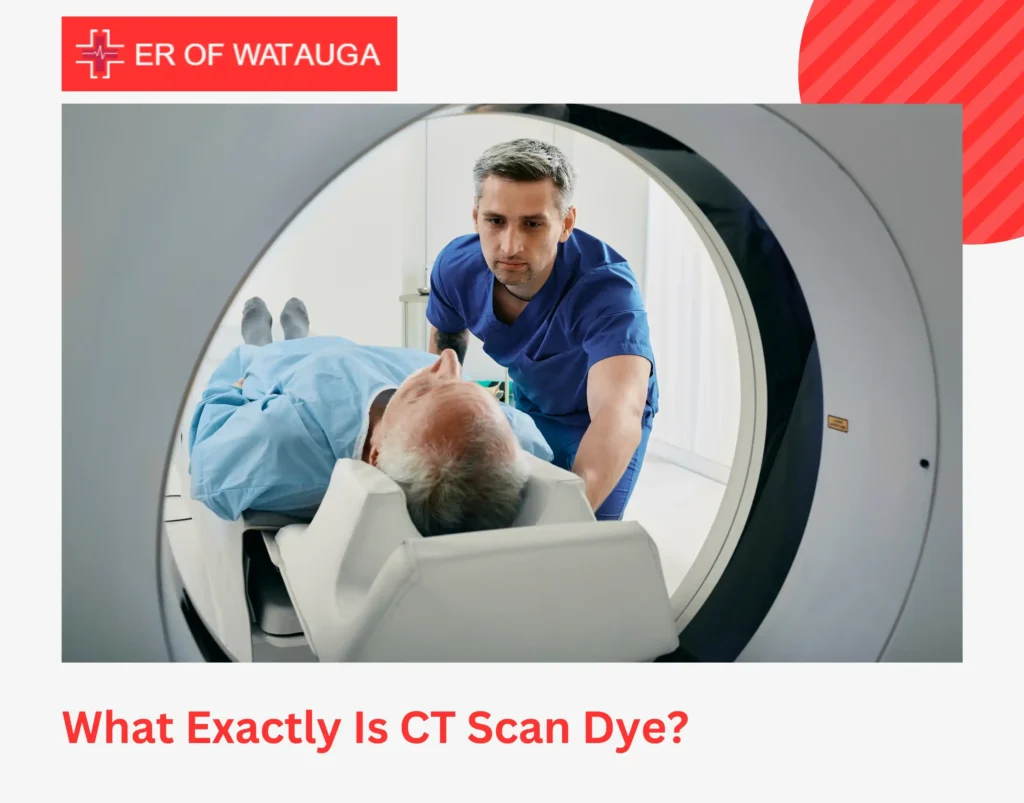
CT scans commonly use iodinated contrast. It may be given through an IV, and sometimes it is taken orally depending on the examination.
When injected into a vein, iodinated contrast circulates through the bloodstream and is primarily eliminated by the kidneys.
Some people experience temporary sensations during injection, such as:
- Warmth throughout the body
- A metallic taste
- A feeling of needing to urinate
- Mild nausea
These sensations are often brief.
MRI contrast
MRI examinations may use gadolinium-based contrast agents. These products are chemically different from iodinated CT contrast.
For people with normal kidney function, gadolinium-based contrast is generally eliminated through the kidneys.
Because different contrast agents have different properties, you should not assume that advice about one type applies identically to another.
5. Avoid Unnecessary “Detox” Products
Searching online may lead you to products claiming to remove medical contrast quickly. These may include herbal cleanses, supplements, special drinks, or restrictive diets.
There is generally no need for a special detox regimen after routine contrast administration.
Some supplements can also interact with medications or be inappropriate for people with kidney or liver problems.
Instead of trying an unproven detox product, focus on:
- Normal hydration
- Regular meals, unless otherwise instructed
- Taking prescribed medications as directed
- Following your imaging center's aftercare instructions
- Contacting your healthcare provider if concerning symptoms develop
6. Pay Attention to Your Symptoms
Most people do not develop serious problems after receiving contrast. However, some reactions can occur.
Possible mild symptoms may include:
- Nausea
- Headache
- Mild itching
- Temporary flushing
- Mild discomfort at the injection site
Some reactions may happen shortly after contrast administration, while delayed reactions can occur later.
Seek prompt medical attention if you experience symptoms such as:
- Difficulty breathing
- Swelling of the lips, tongue, or throat
- Severe rash
- Fainting
- Severe weakness
- Chest discomfort
- Significant confusion
- Rapidly worsening symptoms
A severe reaction is not something you should try to treat with hydration or a home detox.
7. Consider Your Kidney Health
Kidney function is particularly important when discussing contrast elimination.
If your kidneys are functioning normally, they can generally remove contrast efficiently. If you have significant kidney impairment, the elimination process may take longer.
People with known kidney disease, dialysis, a kidney transplant, or other significant medical conditions should follow individualized advice from their healthcare team.
Do not increase your fluid intake substantially without medical guidance if you have been instructed to limit fluids.
Why kidney function matters
The kidneys help filter substances from the blood and eliminate them through urine. Reduced kidney function can change how quickly certain contrast agents leave the body.
Your healthcare provider may review kidney-related blood tests before certain contrast-enhanced examinations when appropriate.
Can You Speed Up Contrast Elimination?
There is no universally recommended home method that dramatically speeds up contrast elimination in a healthy person.
The safest strategy is usually to allow your body to process the contrast naturally.
Helpful habits
- Stay normally hydrated if permitted.
- Follow your healthcare provider's instructions.
- Eat normally unless given different instructions.
- Take medications as prescribed.
- Avoid unnecessary detox supplements.
- Ask about your specific contrast agent if you have concerns.
What to avoid
Do not attempt aggressive hydration, fasting, herbal cleanses, or unapproved treatments simply because you want the contrast to leave faster.

What About Contrast Dye Side Effects?
It is important to distinguish between contrast elimination and contrast reactions.
Removing contrast from the body does not necessarily prevent an allergic or allergy-like reaction. If you develop concerning symptoms, medical evaluation is more important than attempting to flush the contrast out.
Some people may also have temporary sensations after contrast that are not necessarily signs of an allergic reaction.
For example, a brief warm feeling during an iodinated contrast injection can occur and often resolves quickly.
If you are unsure whether a symptom is normal, contact the imaging center or healthcare professional who performed the examination.
When Should You Contact a Doctor?
Contact a healthcare professional if you develop unexpected or persistent symptoms after contrast administration.
You should be especially cautious if you have:
- Known kidney disease
- A previous serious contrast reaction
- Significant heart disease
- A history of severe allergies
- Problems urinating
- New or worsening swelling
- Severe or persistent symptoms
For an emergency involving difficulty breathing, throat swelling, fainting, or another potentially life-threatening symptom, seek emergency medical care immediately.
Conclusion
Understanding how to remove contrast dye from your body can help reduce unnecessary worry after a CT scan or MRI. For most people, the body handles contrast naturally, with the kidneys playing an important role in eliminating many commonly used agents.
Rather than trying to force contrast out through detox products, excessive water, or strenuous exercise, focus on normal hydration and follow your healthcare provider's instructions. If you have kidney disease or develop unusual symptoms after contrast administration, contact a healthcare professional for personalized guidance.
For more blogs visit : https://logcla.com/blogs/1832556/7-Powerful-Tips-How-to-Flush-Contrast-Dye-Safely-in