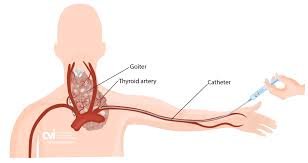
Non-surgical approaches to thyroid treatment are becoming increasingly important for patients who want effective care without the risks and downtime of open surgery. One of the most promising minimally invasive procedures is thyroid artery embolization, a technique designed to reduce the size and symptoms of an enlarged thyroid (goiter) by blocking specific blood vessels that supply it. This guide explains what patients can expect after treatment, including recovery time, clinical results, and long-term outcomes.
Table of Contents
ToggleUnderstanding Non-Surgical Thyroid Artery Embolization
Thyroid artery embolization is a minimally invasive procedure performed by an interventional radiologist. Instead of removing the thyroid or part of it surgically, the doctor inserts a thin catheter—usually through the groin or wrist—and guides it to the arteries supplying the thyroid gland. Small particles are then injected to reduce blood flow to the overactive or enlarged thyroid tissue.
With reduced blood supply, the thyroid gradually shrinks over time. This leads to improvement in symptoms such as neck swelling, difficulty swallowing, breathing discomfort, or cosmetic concerns caused by a visible goiter.
Unlike traditional thyroid surgery, this procedure avoids large incisions, general surgical risks, and visible scarring.
Who Is a Candidate for the Procedure?
Not every patient with thyroid disease is suitable for embolization. It is generally considered for individuals who:
- Have a benign thyroid goiter causing compressive symptoms
- Are not ideal candidates for surgery due to medical conditions or personal preference
- Wish to avoid lifelong thyroid hormone dependence when possible
- Have recurrent goiter after previous treatment
A detailed imaging evaluation, typically including ultrasound and CT scans, is necessary before deciding on treatment. Blood tests are also used to assess thyroid function and rule out malignancy.
What Happens During the Procedure?
The procedure is typically performed in a hospital or specialized interventional radiology center. It usually takes 1–3 hours.
Patients remain awake but are given local anesthesia and mild sedation. A catheter is inserted into a blood vessel and guided using real-time imaging. Once positioned in the thyroid arteries, embolic particles are released to block blood flow.
Most patients experience only mild discomfort during the procedure, such as a warm sensation or pressure in the neck area.
After completion, the catheter is removed, and a small dressing is applied. No stitches are required.
Recovery Time After Thyroid Artery Embolization
Recovery is one of the most significant advantages of this non-surgical approach.
First 24–48 Hours
- Patients are usually observed for a few hours after the procedure
- Mild neck discomfort or swelling may occur
- Fatigue or low-grade fever can be present in some cases
- Most patients return home the same day or next day
First Week
- Mild soreness in the neck or jaw may persist
- Patients are advised to avoid strenuous activity
- Over-the-counter pain relief is usually sufficient
- Normal eating and daily activities can resume gradually
2–6 Weeks
- Noticeable reduction in thyroid swelling begins in many patients
- Breathing and swallowing symptoms often improve
- Energy levels stabilize as the body adjusts
Unlike surgical thyroidectomy, recovery does not involve wound healing or long hospital stays. Most individuals resume normal routines within a few days.
Expected Results: How Effective Is the Procedure?
The results of thyroid artery embolization are gradual rather than immediate. The thyroid gland slowly shrinks over weeks to months as blood supply decreases.
Symptom Improvement
Most patients report:
- Reduced neck pressure
- Easier swallowing
- Improved breathing, especially when lying down
- Decreased visible swelling
Thyroid Volume Reduction
Clinical studies and patient reports suggest:
- Noticeable shrinkage within 1–3 months
- Continued reduction up to 6–12 months
- Significant decrease in goiter size in many cases
Hormone Function
One key advantage is that thyroid function is often preserved, meaning many patients do not require lifelong hormone replacement therapy. However, this depends on the extent of thyroid involvement and individual response.
Long-Term Outcomes and Effectiveness
Long-term outcomes are a major concern for patients considering non-surgical treatment. Current evidence shows encouraging results, though ongoing research is still expanding.
Durability of Results
In many cases, thyroid shrinkage achieved through embolization is long-lasting. Once blood supply is reduced, the treated tissue does not typically regrow quickly.
Symptom Control
Most patients maintain symptom relief for years after treatment. However, some may experience partial regrowth or require repeat procedures if symptoms return.
Need for Additional Treatment
A small percentage of patients may need:
- Repeat embolization
- Adjunct medical therapy
- Surgery if nodules become suspicious or symptoms persist
Quality of Life Improvements
Patients often report significant improvements in:
- Neck comfort and appearance
- Sleep quality
- Breathing and physical activity tolerance
- Overall confidence due to reduced visible swelling
Possible Risks and Side Effects
Although minimally invasive, thyroid artery embolization is still a medical procedure and carries some risks.
Common mild side effects include:
- Temporary pain or discomfort in the neck
- Low-grade fever
- Fatigue
- Mild swelling during the inflammatory response phase
Less common risks may include:
- Temporary changes in thyroid hormone levels
- Infection at catheter insertion site
- Rare unintended embolization affecting nearby tissues
Serious complications are uncommon when the procedure is performed by experienced specialists.
Advantages Compared to Traditional Surgery
Patients often choose this procedure because it offers several benefits:
- No surgical incision or visible scarring
- Short hospital stay or outpatient treatment
- Faster recovery time
- Lower risk of nerve damage affecting voice
- Preservation of thyroid function in many cases
- Reduced need for lifelong medication
However, it is not a replacement for surgery in all cases, especially when cancer is suspected.
What Patients Should Expect in Follow-Up Care
Follow-up care is essential for monitoring progress and ensuring optimal results. Patients typically undergo:
- Ultrasound imaging at regular intervals
- Thyroid function blood tests
- Clinical evaluations for symptom improvement
- Additional imaging if symptoms persist or recur
Doctors may also provide dietary and lifestyle recommendations to support thyroid health.
Final Thoughts
Non-surgical thyroid artery embolization is emerging as a valuable option for patients seeking relief from thyroid enlargement without undergoing invasive surgery. While recovery is relatively quick and outcomes are promising, results vary depending on individual health conditions and the severity of the thyroid disorder. Careful patient selection and expert medical guidance are essential for achieving the best possible outcome.
With proper follow-up and realistic expectations, many patients experience meaningful improvement in both symptoms and quality of life. The growing success of minimally invasive techniques continues to reshape thyroid treatment options worldwide, offering hope for safer and more comfortable care pathways.
In conclusion, Non-Surgical Thyroid Artery Embolization represents a modern, patient-centered approach that balances effectiveness with reduced recovery time and long-term symptom relief.