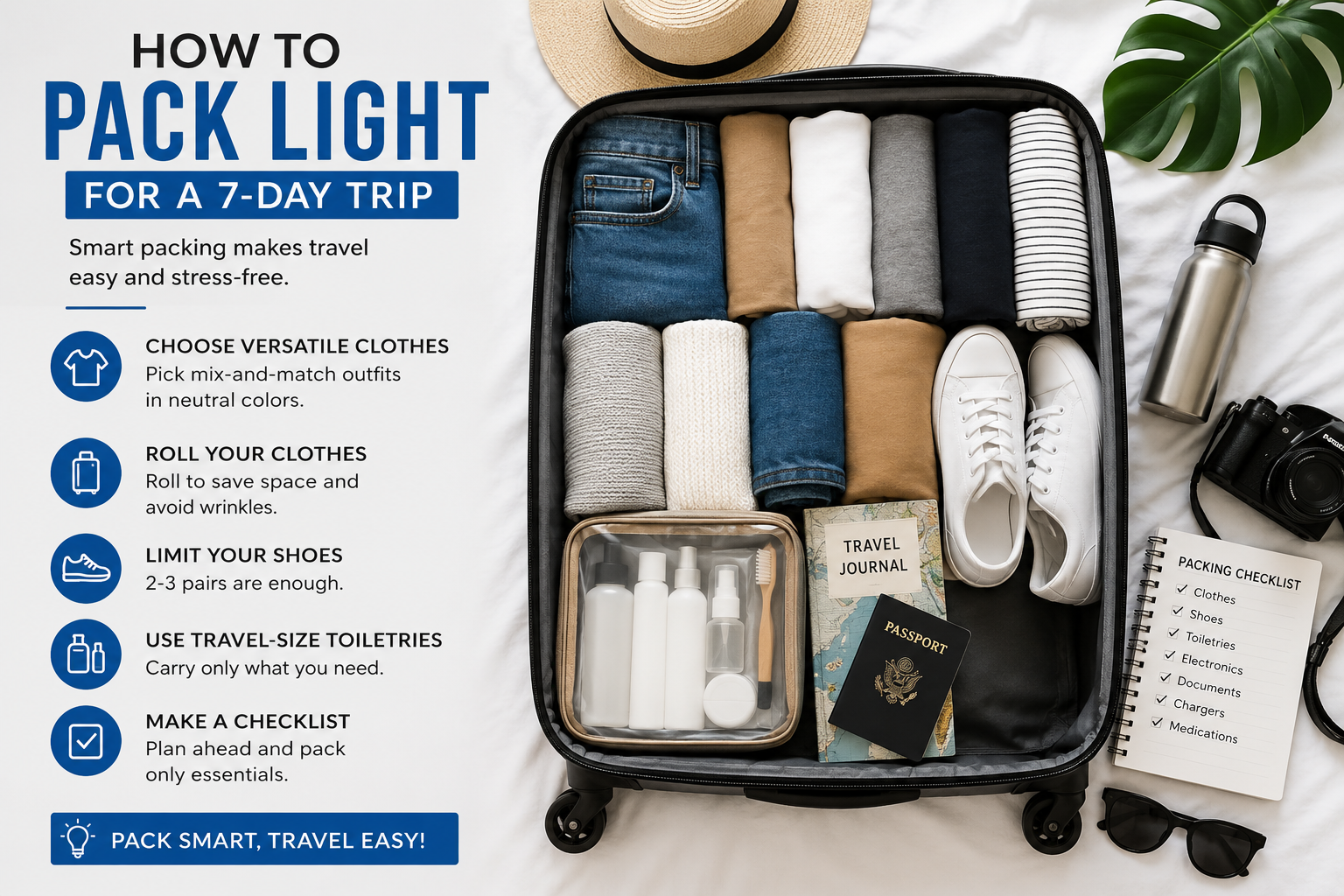
 Packing for a 7-day trip can feel challenging, especially when you want to take everything you might need without carrying a heavy suitcase. The good news is that you do not need a large bag filled with clothes and unnecessary items to enjoy a week-long vacation.
With the right packing strategy, you can fit your essentials into a carry-on suitcase or lightweight travel bag and still have enough outfits for an entire week. The key is to plan your clothes, choose versatile items, and avoid packing things you probably will not use.
Here is a practical guide on how to pack light for a 7-day trip without sacrificing comfort or convenience.
1. Check the Weather Before Packing
Before you start putting clothes into your suitcase, check the weather forecast for your destination.
Knowing whether you will experience hot weather, rain, cold temperatures, or changing conditions can help you decide exactly what to pack. You do not want to carry sweaters and jackets for a warm destination or pack only summer clothes when rain or cooler evenings are expected.
Make a quick list of:
-
Daytime temperature
-
Nighttime temperature
-
Rain forecast
-
Expected activities
-
Dress requirements
-
Local weather conditions
This simple step can prevent overpacking.
2. Plan Your Outfits in Advance
One of the easiest ways to pack light is to plan your outfits before putting anything into your suitcase.
For a 7-day trip, you could plan around five to seven tops, three to four bottoms, and a few versatile layers. Choose clothes that can be mixed and matched rather than packing a separate outfit for every day.
For example, a single pair of neutral trousers can work with several different shirts. Similarly, one lightweight jacket can be worn with multiple outfits.
Try to choose clothing in complementary colors so that almost everything works together.
3. Follow the “Mix and Match” Rule
The biggest secret to packing light is choosing versatile clothing.
Instead of packing seven completely different outfits, select pieces that can be worn in multiple combinations.
A simple packing combination could include:
-
4–5 tops
-
2–3 pairs of trousers or shorts
-
1 lightweight jacket
-
1 comfortable pair of walking shoes
-
1 additional pair of shoes, if necessary
-
7 sets of underwear
-
5–7 pairs of socks
-
Sleepwear
-
One outfit suitable for a nicer dinner
You can adjust these numbers depending on your destination and access to laundry.
4. Choose Lightweight Fabrics
The type of fabric you pack makes a big difference.
Lightweight materials are generally easier to pack, take up less space, and can be more comfortable during travel. Quick-drying clothes are particularly useful if you plan to wash some items during your trip.
Consider packing:
-
Lightweight cotton
-
Merino wool
-
Quick-drying athletic fabrics
-
Thin layers
-
Wrinkle-resistant clothing
Avoid packing heavy clothing unless the weather requires it.
If you need a bulky jacket, consider wearing it during your flight rather than putting it inside your suitcase.
5. Use the 5-4-3-2-1 Packing Method
The 5-4-3-2-1 packing method can make packing much easier.
A basic version includes:
-
5 tops
-
4 bottoms
-
3 pairs of shoes or versatile footwear options
-
2 layers
-
1 special outfit
You can modify this system according to your destination, activities, and personal needs.
For a warm beach vacation, you may need more swimwear and fewer layers. For a winter trip, you may need fewer clothing items but warmer and heavier layers.
The goal is not to follow the numbers perfectly. The goal is to prevent yourself from packing far more than you actually need.
6. Limit Your Shoes
Shoes are among the heaviest and most space-consuming items in your luggage.
Try to keep your footwear to two or three pairs at most.
A good combination for many trips is:
-
Comfortable walking shoes
-
Sandals or casual shoes
-
One dressier option, if required
Wear your heaviest shoes while traveling and pack the lighter pair inside your luggage.
If your trip involves lots of walking, prioritize comfort over style.
7. Use Travel-Size Toiletries
Toiletries can quickly fill an entire suitcase.
Instead of carrying full-size bottles of shampoo, conditioner, body wash, and skincare products, transfer what you need into travel-size containers.
You can also check whether your accommodation provides basic toiletries before packing them.
Your toiletry bag may include:
-
Toothbrush and toothpaste
-
Face wash
-
Shampoo
-
Conditioner
-
Deodorant
-
Moisturizer
-
Sunscreen
-
Basic skincare products
-
Necessary medications
-
Small grooming items
Avoid bringing products you use only occasionally unless you genuinely need them.
8. Roll Your Clothes or Fold Them Efficiently
There is no single perfect way to organize clothes, but rolling can be useful for many travelers because it keeps clothing compact and makes it easier to see what is inside your bag.
You can also use packing cubes to separate different categories.
For example:
-
Packing cube 1: Tops
-
Packing cube 2: Bottoms
-
Packing cube 3: Underwear and socks
-
Small bag: Toiletries
-
Separate pouch: Electronics
Packing cubes can make your suitcase more organized and reduce the temptation to unpack everything just to find one item.
9. Wear Bulky Items During Your Flight
If you need to bring a hoodie, jacket, boots, or heavier trousers, consider wearing them while traveling.
This keeps your suitcase lighter and creates more space for other essentials.
You can always remove a jacket once you are on the plane or place it under your seat if necessary.
However, avoid wearing too many uncomfortable layers just to save luggage space. Your comfort during the journey still matters.
10. Pack for Activities, Not “What If” Situations
One of the biggest reasons people overpack is the phrase: “What if I need it?”
You probably will not need three formal outfits if you are taking a casual vacation. You probably do not need multiple pairs of shoes if you will mostly be sightseeing.
Instead, think about what you actually plan to do.
If your trip includes:
-
City sightseeing → comfortable walking shoes
-
Beach days → swimwear and sandals
-
Hiking → suitable hiking shoes
-
Fine dining → one smart outfit
-
Business meetings → appropriate professional clothing
Build your luggage around your actual itinerary.
11. Leave Some Space in Your Suitcase
Do not fill every inch of your suitcase before leaving home.
Leaving some extra space gives you room for souvenirs, gifts, or items you purchase during your trip.
A suitcase that is completely full can also become difficult to close when you add even a few small items.
Aim to leave approximately 10–20% of your luggage space available.
12. Take Advantage of Laundry
If you are traveling for a week, you do not necessarily need seven complete outfits.
Washing a few clothes during the trip can dramatically reduce how much you need to carry.
Many hotels and vacation rentals offer laundry facilities, while local laundromats can also be useful.
For longer trips, choosing clothing that dries quickly can make washing clothes even easier.
13. Keep Electronics Minimal
Electronics can add unexpected weight to your luggage.
Before packing, think about what you genuinely need.
For most travelers, the essentials might include:
-
Smartphone
-
Charging cable
-
Travel adapter
-
Power bank
-
Earphones
-
Laptop or tablet, if necessary
Avoid taking multiple devices that perform the same function.
If your phone can handle navigation, entertainment, photography, and travel documents, you may not need to carry additional gadgets.
14. Keep Important Items in Your Carry-On
Even if you are checking a suitcase, keep important items with you.
Your carry-on should generally contain essentials such as:
-
Passport or identification
-
Wallet
-
Phone
-
Travel documents
-
Medication
-
Chargers
-
Valuable electronics
-
Basic toiletries
-
One change of clothes
It is also smart to keep your travel information easily accessible.
Before heading to the airport, reviewing your flight details, baggage allowance, and travel requirements can help you avoid last-minute problems. For additional travel planning information and useful airline-related resources, you can also visit FlyingGetaway.
15. Use a Simple Packing Checklist
A checklist can stop you from packing unnecessary items and help you remember important essentials.
Clothing
-
4–5 tops
-
2–3 bottoms
-
1 jacket or light layer
-
Underwear
-
Socks
-
Sleepwear
-
One smart outfit
-
Swimwear, if required
Footwear
-
Comfortable walking shoes
-
Sandals or casual shoes
-
Optional dress shoes
Toiletries
-
Toothbrush and toothpaste
-
Deodorant
-
Sunscreen
-
Skincare products
-
Travel-size shampoo
-
Basic grooming products
Travel Essentials
-
Passport or ID
-
Wallet
-
Phone
-
Charger
-
Power bank
-
Travel adapter
-
Medication
-
Travel documents
16. Do a Final “Remove Five Things” Check
Once your suitcase is packed, do not immediately close it.
Look through everything and ask yourself:
“Will I realistically use this during my trip?”
Remove five items that are not essential.
It could be an extra shirt, a second jacket, an unnecessary gadget, an additional pair of shoes, or toiletries that your hotel already provides.
This simple trick can significantly reduce unnecessary luggage.
Final Thoughts
Learning how to pack light for a 7-day trip is mostly about preparation rather than sacrificing the things you enjoy.
Plan your outfits, choose versatile clothing, limit your shoes, use travel-size toiletries, pack according to your itinerary, and take advantage of laundry when possible. Most importantly, avoid packing for every possible situation.
A lighter suitcase can make your trip easier from the airport to your hotel and everywhere in between. With a little planning, you can travel comfortably for an entire week without carrying an oversized suitcase.
Before your next trip, make sure you also review your flight information, baggage rules, and travel requirements so you can start your journey prepared and stress-free.